
Amazon's Second Chance Deal Days ran from 1–10 September 2026, and for ten days the site quietly became one of the biggest refurbished-tech sales in the UK up to 50% off phones, laptops, headphones and kitchen gear that had been returned, tested, and given a second life. If you missed it, don't worry. The event is really just a spotlight on something Amazon runs all year round: the Renewed and Resale programmes that let you buy the same big-name gadgets for noticeably less, provided you know what you're actually buying.
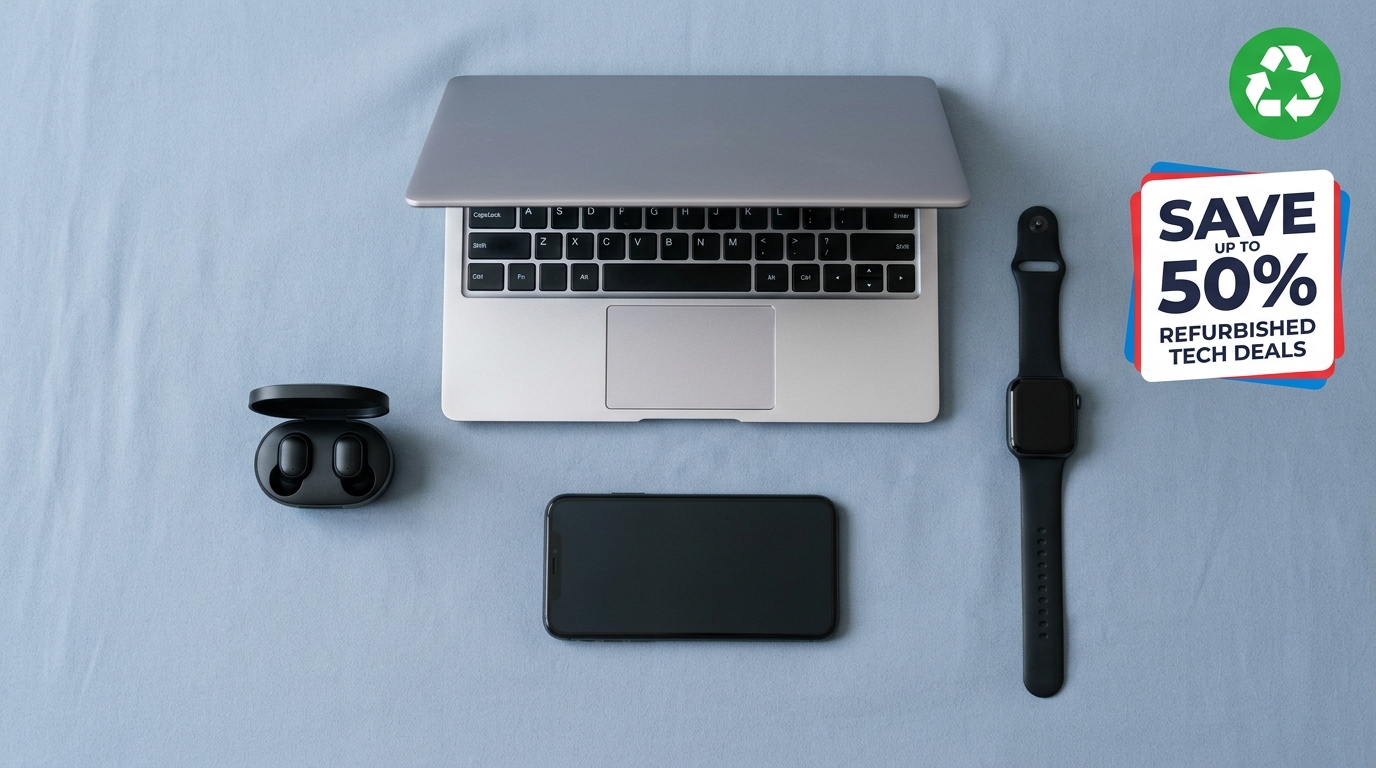
That's the part most coverage of the sale skipped over. So here's the practical version: what the event actually included, how Amazon's condition grading works, whether renewed tech is genuinely worth the risk, and how to keep finding these savings long after the ten days are over.
What Was Amazon Second Chance Deal Days 2026?
Second Chance Deal Days is Amazon's UK campaign for its returned and refurbished inventory, and this year's run (1–10 September) leaned into two programmes:
- Amazon Renewed — professionally refurbished products, inspected and repaired by Amazon-vetted suppliers before resale.
- Amazon Resale — used and open-box items that customers returned, graded from "Like New" down to "Acceptable" without a full refurbishment process.
The categories on offer were the ones you'd expect from a tech-heavy clearout: personal tech, computing, gaming, fitness kit, hair and beauty tools, and toys and games, with more than 30 brands represented, including Apple, Samsung, Sony, LEGO, PlayStation, Xbox and Google. Discounts ran up to 50% off the equivalent new price, and for the first time this year, the event also included pre-loved luxury bags and accessories through the reseller Luxclusif, with an extra 15% off already-discounted prices.
Amazon has framed the push partly as an investment story — reportedly around £3 billion into returns operations across Europe — and partly as a savings one, pointing to more than £95 million saved by UK shoppers buying second-hand through the platform over the past year. Whatever the framing, the practical upshot for shoppers is the same: a genuinely large pool of discounted tech, if you know how to pick through it properly.
Renewed, Resale, or Warehouse — What's the Difference?
Amazon uses a few overlapping terms, and it's easy to assume they all mean the same thing. They don't quite.
| Programme | What it actually is | Who inspects it |
|---|---|---|
| Amazon Renewed | Fully refurbished products — repaired, tested and cleaned before resale | Amazon-qualified refurbishment partners |
| Amazon Resale | Customer returns and open-box stock, sold largely as-is with a condition grade | Amazon's own returns process |
| Amazon Warehouse (older term) | Amazon's original open-box/returns storefront — largely folded into what you now see as Resale listings | Amazon's returns process |
If you see "Amazon Warehouse" mentioned anywhere, treat it as the older name for what's now mostly sold under Resale. The distinction that actually matters when you're buying is Renewed versus Resale: Renewed items have been through an active repair and testing process, while Resale items are simply returns that were checked over and re-graded, with no guarantee they've been fixed if something was wrong with them.
How Amazon Grades Condition (and Why It Matters)
Every Renewed and Resale listing carries a condition grade, and it's worth actually reading rather than skimming past. Amazon's typical grading framework for Renewed electronics looks like this:
| Grade | What to expect | Typical battery health | Standard guarantee |
|---|---|---|---|
| Premium | No visible damage from normal viewing distance | Above 90% | 1 year |
| Excellent | No visible damage from normal viewing distance | Above 80% | 90 days |
| Good | Minor imperfections, visible up close | Above 80% | 90 days |
| Acceptable | Visible scratches, noticeable to touch | Above 80% | 90 days |
Resale listings use a similar but separate scale (Like New, Very Good, Good, Acceptable), which describes cosmetic condition on a customer return rather than a professionally refurbished unit. The gap between "Excellent" and "Acceptable" on a phone or laptop is genuinely noticeable, so it's worth reading the exact wording on the listing rather than assuming every renewed product looks the same.
One caveat worth flagging honestly: guarantee lengths and return terms can vary by product, seller and category, so always check the specific listing page before buying rather than relying on a general rule of thumb — including this one.
Is It Actually Worth It?
Where renewed and resale tech makes sense:
- You want a specific model — a particular iPhone, a specific pair of headphones, a named games console — at a lower price than buying new, and you're not precious about a factory-fresh box.
- The category is something with a short trend cycle rather than a long-term investment, like last season's fitness tracker or a games console you'll upgrade again in a few years.
- You're comfortable checking battery health and cosmetic grade before you commit, rather than treating every listing as identical.
Where it's worth being more cautious:
- You're buying as a gift and want guaranteed pristine condition and full retail packaging — stick to "Premium" grade or buy new.
- The item is something you'll rely on daily without a backup (a work laptop, for example) and a shorter 90-day guarantee window feels too tight for your comfort.
- You haven't checked who the item is actually sold and fulfilled by — third-party marketplace sellers can list under similar-sounding programmes with different terms.
None of this makes renewed tech a bad option — it just means the savings come with a bit of homework attached, which is exactly the kind of thing worth doing before you click buy rather than after.
How to Shop It Properly
- Read the grade, not just the headline discount. "Up to 50% off" often refers to the lowest grade in a range — check what condition you're actually being offered at that price.
- Work out the real saving. Compare the renewed price against the current new price for the same model and storage/spec, not the original RRP from launch — prices on new stock move too.
- Check who it's sold by. Listings sold and fulfilled by Amazon under the Renewed programme carry Amazon's stated guarantee; third-party sellers on the same page may have their own separate return policy.
- Look for the "Save with Used" option. Many product pages show renewed or resale options alongside the new listing — it's often tucked below the main buy box rather than on the front page of a category.
- Check the return window before you buy, not after. Note the exact number of days and what "guarantee" actually covers (replacement, refund, or repair) for that specific listing.
- Stack it with a voucher code where one exists. Renewed and resale prices aren't always excluded from promotional codes — it's worth checking PrimeVoucher's Amazon page for any current offers before you check out, and our guide to stacking discount codes and cashback if you want to combine savings further.
Will Second Chance Deal Days Come Back?
Almost certainly, in some form. This is now the second UK run of the campaign, and Amazon's Renewed and Resale programmes operate year-round regardless of whether a named "deal days" event is live — so even outside the ten-day window, the same grading system, guarantees and savings are available any time you shop. If you're eyeing a specific product and missed the September event, it's worth checking the listing anyway before assuming you have to wait for the next one.
Amazon also has its bigger October sales event, Prime Big Deal Days, on the horizon — we've covered what to expect and how to prepare for that one separately if you'd rather hold out for new stock at a discount instead of renewed.
FAQs
Is Amazon Renewed reliable? Renewed items go through inspection, testing and cleaning by Amazon-qualified suppliers before resale, and carry a guarantee (typically 90 days, or a year on Premium-grade items). It's a more supervised process than a standard customer return, though condition still varies by grade, so checking the specific listing matters.
What's the difference between Amazon Renewed and Amazon Resale? Renewed products have been actively refurbished and repaired. Resale products are customer returns and open-box stock that have been graded for cosmetic condition but not necessarily repaired.
Does Amazon Renewed come with a warranty? Yes — Amazon's standard Renewed guarantee generally runs 90 days, extending to a year on items graded Premium, though exact terms can vary by product and should be checked on the listing itself.
Can I return a renewed or resale item if I don't like it? Generally yes, within the guarantee or return window stated on the specific listing — this is worth confirming before purchase rather than assuming a blanket policy applies across every item.
Is Second Chance Deal Days only for Amazon Prime members? No — the event has been open to all UK Amazon customers, not gated behind Prime membership, unlike Prime Day-branded events.
Are these savings only available during the named event? No. The Renewed and Resale programmes run continuously; the "deal days" branding is a promotional push on top of savings that are generally available year-round via the relevant product listings.
Looking for more ways to save on your next Amazon order? Check PrimeVoucher's Amazon UK page for current offers, browse Electronics deals across other retailers, or see our full list of UK stores for more ways to cut the cost of your shop.