
 If your weekly shop has quietly filled up with soup, beans and stock cubes over the last few weeks, you're not imagining it. New retail sales data shows UK shopping baskets have swung sharply away from summer treats and back towards comfort food and store-cupboard staples right as households brace for the most expensive quarter of the year.
That combination matters. It means the products going up in demand right now are also some of the cheapest to buy smartly, if you know where to look for the savings. Here's what's actually changing in UK grocery shopping this autumn, and the practical ways to keep your food bill under control without cutting back on the meals that get you through the colder months.
What's Actually Changed in UK Shopping Baskets This Month
According to retail analytics firm NIQ, whose figures were reported by trade titles Talking Retail and Retail Times in mid-September 2026, total till sales growth at major UK supermarkets slowed to 1.8% in the four weeks to 5 September — down from an average of 3.2% growth earlier in the summer. Overall unit sales actually fell slightly (-0.1%), the first drop since April, as the exceptionally hot summer gave way to cooler weather and the return to school.
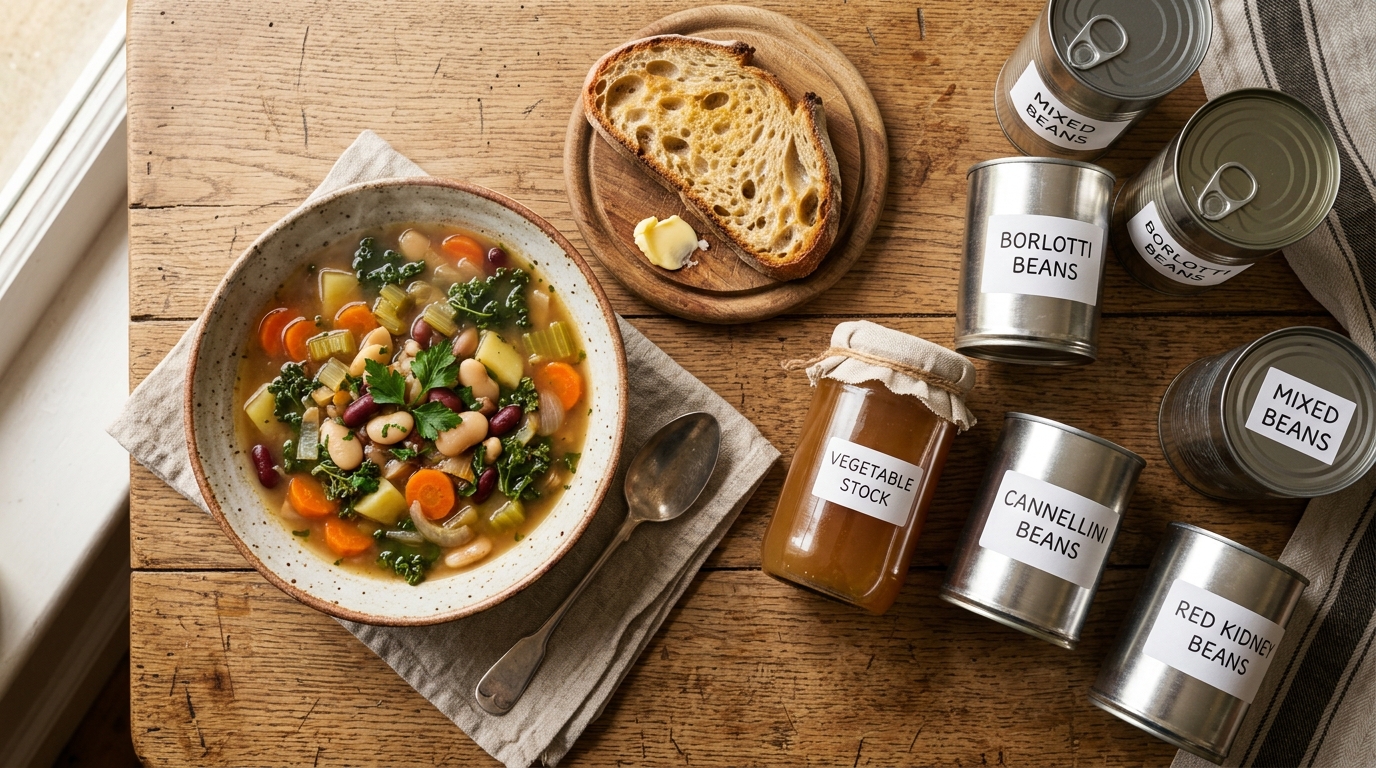
The category-level detail is where it gets interesting. Summer favourites collapsed month-on-month: ice cream fell 22.6%, olives 16.4%, fresh dips 10.4%, and fresh fruit 6.9%. At the same time, comfort food staples surged. Canned beans (excluding baked beans) were up 10.1%, with butter beans specifically jumping 31.5%. Gravy and stock rose 4.1%, and both chilled and ambient soup — while still down year-on-year — climbed roughly 29% compared with the previous month alone.
Shoppers also changed how they shop, not just what they bought. Larger supermarkets saw stronger growth (+2.4%) than convenience stores (+0.3%), suggesting a shift back towards planned, bigger shopping trips rather than frequent top-up visits — usually a sign that households are trying to shop more deliberately and cut down on the impulse spending that convenience trips tend to encourage.
Online grocery kept growing faster than the market overall, up 10.1% in value to £2.1 billion, with Ocado posting 17.4% growth over a 12-week period and M&S seeing a jump of 10.8%, helped by a higher average basket value. That's worth knowing if most of your shopping is done in an app or browser rather than in store, since it means retailers are actively competing for online custom right now — exactly when discount codes and app-based offers tend to be most generous.
Why This Matters for Your Budget This Autumn
The same NIQ report notes that a third of UK households currently name the cost of living as their primary concern, and three-quarters expect moderate-to-severe financial pressure heading into autumn and winter. Retailers know this, and the report expects increased price sensitivity and promotional activity through the run-up to Christmas as a result.
That's genuinely useful to know before you shop. It means the categories seeing the biggest swing towards demand right now — tinned staples, soup, gravy and stock — are also the ones supermarkets are most likely to promote heavily over the next few months to keep price-conscious shoppers loyal. Timing a slightly bigger stock-up around those promotions, rather than buying little and often at full price, is one of the simplest ways to get ahead of the season rather than reacting to it.
Seven Ways to Cut Your Autumn Food Shop
1. Build meals around what's actually cheap right now
Own-label tinned beans, pulses, soup and stock are exactly the products supermarkets are pushing hardest this month, which usually means better promotional pricing and more frequent multi-buy deals on them specifically. A pot of soup or a bean stew made from three or four tinned staples costs a fraction of a ready meal and freezes well, so it's worth batch-cooking when the ingredients are on offer rather than buying them one meal at a time. Branded options like Heinz or Batchelors are worth grabbing too when they dip to a genuinely reduced price, rather than paying full price out of habit.
2. Make Tesco Clubcard pricing work for these specific categories
Tesco is one of the retailers actively promoting the comfort food categories seeing the biggest swing in demand, and Clubcard pricing applies automatically at checkout once you're signed up — it costs nothing and takes a couple of minutes to set up if you haven't already. Because the saving is applied at the till rather than through a code you have to remember, it's one of the easiest wins available on exactly the products you're likely buying more of right now. Browse Tesco's current offers and Clubcard deals on PrimeVoucher before your next shop, and check the supermarkets category for other grocery offers as they're added.
3. Switch to fewer, bigger planned shops
The data showing larger supermarkets growing faster than convenience stores this month reflects households shopping less impulsively — and it's a habit worth adopting deliberately if you're not already doing it. A single planned shop with a list, built around what you'll actually cook that week, consistently costs less than several smaller top-up trips, where the odd extra item at full price adds up faster than it feels like it should.
4. Stack a discount code with cashback for anything outside your regular shop
Your regular grocery run isn't always where the biggest savings sit — it's often specialist or one-off orders (a slow cooker for batch-cooking soups, storage containers for freezing portions, kitchen equipment) where a discount code and cashback together make the most difference. PrimeVoucher's guide to stacking discount codes and cashback covers exactly how to combine the two without losing either saving.
5. Don't skip codes on your online shop just because it's groceries
With online grocery growing faster than in-store shopping and retailers like Ocado and M&S both posting strong gains, this is a competitive moment for online grocery custom — which usually means more active promotions and app-based offers than usual. It's worth checking for a working code or free delivery threshold before you check out rather than assuming grocery orders aren't worth the extra step. PrimeVoucher's guide to free delivery codes explains where to look and why some codes fail to apply.
6. Get ahead of the pre-Christmas promotional wave
Because retailers are already expecting price-sensitive shoppers through to Christmas, the run-up to the festive period typically brings some of the year's better deals on non-perishable staples — tinned goods, dried goods, and household basics that don't go off. Building a small stock of these when they're genuinely discounted, rather than only shopping for what you need that week, spreads the cost and takes pressure off the more expensive weeks in November and December. PrimeVoucher's UK sales calendar 2026 sets out when the key sales moments land this year.
7. Check whether you qualify for an extra discount scheme
If you're NHS staff, a student, a teacher, or in the armed forces, you may be eligible for verified discount schemes that apply on top of your usual shopping — a saving that's easy to forget about if you've never checked. PrimeVoucher's guides to NHS discount codes and student and teacher discount codes cover who qualifies and how verification works.
Frequently Asked Questions
Why is comfort food demand rising in the UK right now? Retail data from NIQ shows a clear swing towards tinned beans, soup, gravy and stock through early September 2026, coinciding with cooler weather, the end of an unusually hot summer, and the return to school — all of which typically shift households back towards home-cooked, budget-friendly meals.
Are UK grocery prices actually rising this autumn? The same report found overall till sales growth slowing rather than accelerating, but it also flagged that most households expect financial pressure to build through autumn and winter, with retailers responding by increasing promotional activity — so it's less a case of prices spiking and more a case of squeezed budgets meeting a more promotional market.
Is a big supermarket really cheaper than a convenience store for my weekly shop? Generally yes, for a planned shop covering a full week's meals — convenience stores are priced for smaller, more frequent, more impulsive purchases. The recent shift back towards larger stores reflects shoppers doing more planning and fewer impulse top-ups, which tends to reduce overall spend.
Can I get cashback on my online grocery shop? It depends on the retailer and your cashback provider, so it's worth checking before you order rather than assuming groceries are excluded. Where it is available, combining it with a valid discount code is usually fine, provided the code comes from a source your cashback provider recognises.
Is it worth signing up to a supermarket loyalty scheme just for this? If you're not already a member of a scheme like Tesco Clubcard, it costs nothing to join and the saving is applied automatically at checkout on eligible items — including many of the comfort food staples currently seeing the biggest promotional push, which makes now a reasonable time to sign up if you haven't already.
Whatever else changes with your weekly shop this autumn, checking for a working voucher code or Clubcard price before you buy costs nothing and takes seconds. Browse Tesco's current offers or the full supermarkets category on PrimeVoucher to see what's currently available.