
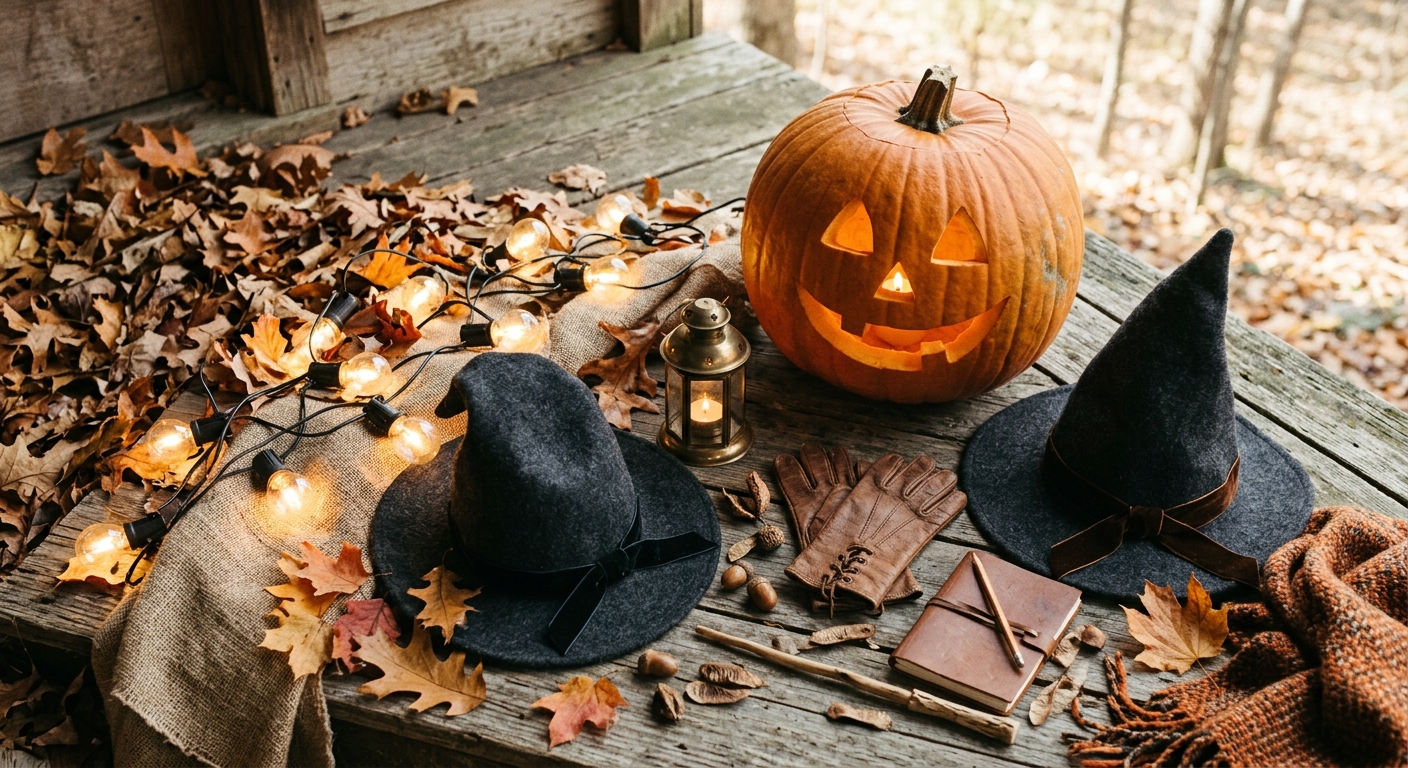
 Halloween 2026 falls on a Saturday, which usually means more house parties, more trick-or-treating, and — if last year's figures are anything to go by more spending than a weekday Halloween tends to bring. UK shoppers put an estimated £779 million into Halloween in 2025, according to analysis by Finder, and with the 31st landing on a weekend this year, there's a reasonable chance that figure holds up or grows a little in 2026.
None of that has to mean an expensive month. Most of the extra cost comes from things people didn't plan for — a costume bought in a rush three days before a party, or sweets picked up at full price because the multi-buy deal had already sold out. With a bit of forward planning, Halloween can be done properly without the bill creeping past what it's actually worth.
This guide covers what UK shoppers really spend on Halloween, where the money tends to go, and the specific ways to bring each part of it down — from costumes and decorations to the sweets bowl by the front door.
When is Halloween 2026, and why the date matters this year
Halloween falls on Saturday 31 October 2026. That's worth factoring into your planning for two reasons.
First, a weekend Halloween tends to mean more evening parties and adult get-togethers rather than a quiet weekday of trick-or-treating followed by school the next morning — part of why spending is expected to hold up compared with recent midweek years. Second, it lands close to October half term for most of the UK, so families juggling half-term days out and a Halloween costume are covering two seasonal costs in the same fortnight. If that's you, PrimeVoucher's October half term guide covers the regional dates and ways to save on the wider half-term spend.
What UK shoppers actually spend on Halloween
It helps to know where the average pound actually goes before deciding what's worth cutting back on.
Finder's analysis puts the UK Halloween market at roughly £779 million for 2025, up sharply from £536 million in 2020 — a 45% rise over five years. Average spend per person (among those who plan to spend anything at all) was around £26, though that varies a lot by age: Millennials spent closest to £50 on average, Gen Z around £37, Gen X around £16, and Baby Boomers under £5.
A YouGov survey from 2025 adds useful context: 51% of British adults don't celebrate Halloween at all, and of those who do, 55% spend less than £25. Only 8% spend more than £100, and that's concentrated heavily among 18-24 year-olds. In other words, Halloween doesn't have to be an expensive occasion by default — the people spending the most are a fairly narrow slice of shoppers, usually going all-in on parties or elaborate costumes.
The same YouGov research found Tesco (33%), Amazon (28%), Asda (24%), Sainsbury's (24%) and Aldi (20%) were the retailers Britons shopped with most for Halloween — supermarkets and Amazon, rather than specialist costume or party shops, do most of the heavy lifting.
Costumes: where the real savings are
Costumes are usually the single biggest Halloween expense, and also the easiest to bring down without it looking like you've cut corners.
Buying secondhand or DIY is far more common than you'd think. YouGov found 42% of UK Halloween shoppers made their own costume in 2025, and 31% bought from a charity shop (rising to 37% among 18-24 year-olds). A black outfit from your own wardrobe, a few cheap accessories, and some face paint will usually beat a boxed costume on both price and originality.
If you are buying, buy something wearable afterwards. A witch's hat and cape, a plain oversized shirt for a "ghost," or dark jeans and a jacket as the base for a horror-film look all have a life beyond 31 October, unlike a single-use printed jumpsuit. If you're already refreshing your autumn wardrobe, PrimeVoucher's autumn/winter fashion trends guide has ideas for pieces that double up as everyday wear and a costume base.
Know what's trending before you buy, since demand affects price. For 2026, licensed costumes tied to Netflix's KPop Demon Hunters are shaping up to be one of the most searched-for options for children and teenagers, alongside the usual mix of horror-film characters and classic witches, vampires and skeletons. Popular, licensed costumes tend to sell out and get marked up as the date approaches, so if a specific character costume matters to your child, it's worth buying it in early-to-mid October rather than the week of Halloween.
Online is the most common source, but it's not the only one. 47% of UK Halloween shoppers buy costumes online, rising to over half among men and 18-24s — but that also means online costume prices can move around a lot in the final fortnight before Halloween as stock tightens. PrimeVoucher's Amazon UK page is worth checking for current codes before paying full price on a costume.
Decorations: buy less, reuse more
Decorations are one of the easiest Halloween costs to bring down permanently, because — unlike a costume — reusable decorations don't need replacing every year.
A few practical rules of thumb:
- Buy anything reusable (lights, artificial pumpkins, window clings, bunting) with next year in mind, and store it properly afterwards rather than binning it on 1 November. This turns a repeat annual cost into a one-off purchase.
- Supermarkets are usually the cheapest source for basic decorations, not specialist Halloween or party shops. Browse PrimeVoucher's supermarkets category for current offers before assuming you need a dedicated party retailer.
- Real pumpkins are genuinely worth doing yourself rather than buying pre-carved. A carving pumpkin from a supermarket or farm shop costs a fraction of a pre-carved one, and it's a free activity for kids on top.
- Don't over-buy sweets or drinks decorations early, since these tend to get discounted closer to the date as retailers try to clear stock before it goes past its point of relevance. Anything perishable is better bought in the final week, not the first.
For anything bigger — string lighting, garden displays, or a proper Halloween-themed room set-up — PrimeVoucher's home and garden category is the place to check for verified codes before paying list price.
Sweets and treats: timing beats brand loyalty
Trick-or-treat sweets are a small individual cost but add up fast if you're buying for a whole street's worth of visitors, and they're also one of the easiest categories to overspend on simply by buying too early or too late.
Multi-buy deals on sharing bags and treat-size chocolate tend to appear from the second week of October through to the day itself, so there's little benefit to buying in September — prices are rarely at their lowest that far out, and you risk temptation to dip into the bag before the day arrives. Buying in the final few days, on the other hand, means competing with everyone else for stock and paying closer to full price if the good deals have already sold through.
The middle two weeks of October are typically the sweet spot: deals are live, stock is still well filled, and you're not paying a last-minute premium. Tesco's store page on PrimeVoucher is worth checking regularly through October, given it was the single most-used retailer for Halloween shopping in 2025.
Hosting a Halloween party without the costs stacking up
With Halloween falling on a Saturday in 2026, more households are likely to host or attend an evening party rather than just answer the door to trick-or-treaters. A few ways to keep a party budget-friendly without it feeling stripped back:
- Split costs with whoever you're hosting alongside. Decorations, drinks and a playlist can all be shared costs rather than one household covering everything.
- Makeup and face paint go a long way as a costume on their own. A well-done spooky makeup look, using products from somewhere like Boots, can replace a full costume outright for teenagers and adults, and works out considerably cheaper than a licensed outfit.
- Set a per-head budget for food rather than catering everything yourself. A simple bring-a-dish approach avoids one person absorbing the entire catering bill.
- Check for accessories and outfit pieces through your usual fashion retailers, rather than a seasonal-only costume shop — PrimeVoucher's ASOS store page and fashion category are both worth a look for anything wearable beyond one night.
Making the most of every code and offer
If you're stacking up several smaller Halloween purchases — a costume, some decorations, sweets, maybe makeup — it's worth applying any discount codes and available cashback in the right order rather than one at a time. PrimeVoucher's guide on stacking discount codes and cashback explains how to combine them without breaking either offer's tracking.
More broadly, Halloween is just one stop on a busy run of UK shopping events between now and Christmas. PrimeVoucher's UK shopping sales calendar lays out what's coming next — from late-October deals through to Black Friday and beyond — so you can plan bigger purchases around the right moment rather than paying full price out of habit.
Halloween 2026 money-saving FAQs
When is Halloween 2026? Halloween falls on Saturday 31 October 2026, meaning most areas will see Halloween activity concentrated on the weekend rather than spread across a weekday evening.
How much do UK shoppers spend on Halloween on average? Around £26 per person among those who plan to spend anything, according to 2025 data from Finder, though this varies significantly by age — Millennials spent closest to £50 on average, while Baby Boomers spent under £5.
What's the cheapest way to get a Halloween costume? Making your own from clothes you already own, or buying from a charity shop, are both more common than buying new — 42% of UK Halloween shoppers made their own costume in 2025, and 31% bought secondhand from a charity shop.
Should I buy Halloween decorations early or wait? Buy reusable decorations (lights, artificial displays, bunting) whenever you see a good price, since they'll do duty again next year. Save perishable items like sweets and pumpkins for the final one to two weeks before the day.
What's a popular Halloween costume trend for 2026? Costumes tied to Netflix's animated film KPop Demon Hunters are shaping up to be among the most in-demand for children and teenagers this year, alongside long-running favourites like witches, vampires and horror-film characters. Popular licensed costumes tend to sell out closer to the date, so buying earlier in October is worth doing if a specific character matters.
Ready to check what's currently on offer? Browse PrimeVoucher's full list of UK stores for verified codes on costumes, decorations and everything else on your Halloween list.