
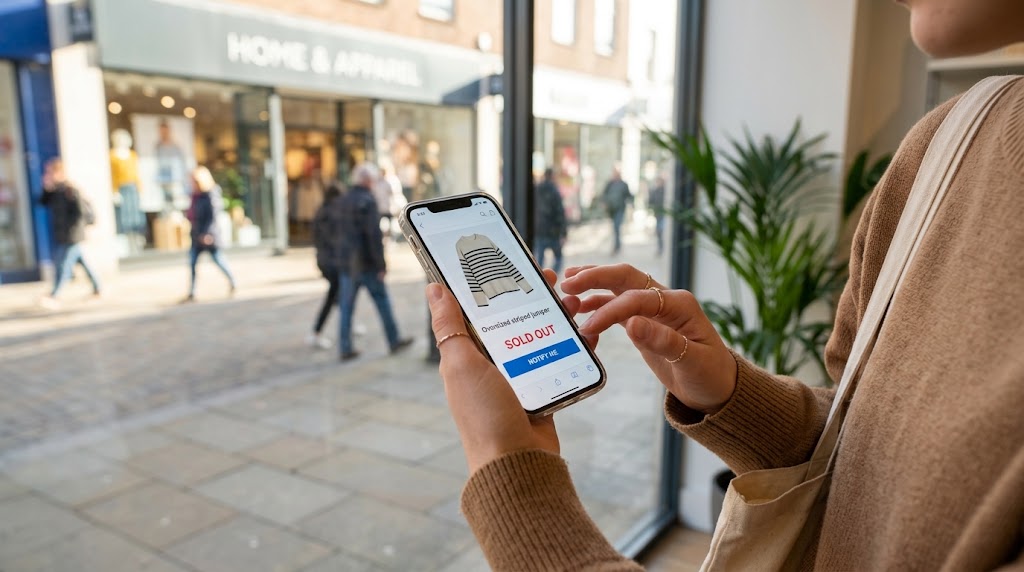
 You spot it on TikTok or Instagram a product everyone's suddenly talking about. You click through to buy it twenty minutes later and it's already gone. "Notify me when back in stock." Sound familiar?
It's not your imagination, and it's not bad luck. New UK research published this month confirms what a lot of shoppers have suspected for a while: viral products are selling out faster than ever, and retailers are struggling to keep up. Understanding why it happens makes it a lot easier to actually get the thing you want instead of refreshing a product page fifteen times a day.
Why everything seems to sell out faster right now
A study of more than 1,000 UK shoppers by retail data firm invent.ai, published in September 2026, put some real numbers behind the frustration. Fifty-nine percent of shoppers said viral social media trends are now causing products to sell out more quickly than they used to, and 53% specifically pointed to influencer and creator content as the reason stock disappears so fast.
It isn't only about demand outpacing supply, either. The same research found that 53% of shoppers believe retailers simply aren't using their own sales data effectively to predict which products are about to take off — and 49% expect retailers to use AI-style forecasting to prevent stockouts happening in the first place. When a product does sell out and a retailer clearly hadn't anticipated the demand, frustration jumps to 61%.
Put simply: it's not just you being unlucky with timing. Brands are being caught out by how quickly a product can go from "nobody's heard of this" to "everyone wants one" once social media picks it up, and most supply chains aren't built to move that fast.
Retailers know scarcity works on you — and they're using it
Here's the part that's worth knowing before you next find yourself desperate for a sold-out item: scarcity doesn't just annoy shoppers, it also makes brands more appealing. The same invent.ai research found that 44% of shoppers said missing out on a viral health and beauty product actually made the brand more desirable — rising to 57% among Gen Z shoppers. In fashion, 38% said the same, climbing to 54% among millennials.
More strikingly, almost half of shoppers said they'd buy faster from a brand next time, specifically because they missed out on a previous viral drop — a figure that rises to 61% among millennials for health and beauty products. That's the psychology of scarcity working exactly as intended: missing out doesn't put people off, it primes them to move faster next time.
None of that means you have to play along on the brand's terms, though. Once you know a "limited drop" is often a deliberate strategy rather than a genuine one-off, you can plan around it instead of panic-buying at inflated prices from a reseller.
How to actually get a viral product before it sells out
Set up restock alerts before you need them
Most major UK retailers now have a "notify me" or "email me when back in stock" option on out-of-stock product pages — it's easy to miss because it's usually a small link rather than a button. Sign up for these the moment you see a product is out of stock, not after you've spent a week checking manually. Several free browser extensions and stock-tracking sites also monitor specific product pages and email or text you the moment stock changes, which is far less effort than refreshing a page yourself.
Join the retailer's mailing list early
This sounds unglamorous, but it's one of the most reliable routes to genuine early access. Retailers frequently give newsletter subscribers a head start on restocks and limited drops — sometimes by a few hours, which is often all the advantage you need. It's also a route to a welcome discount code on the item once you do get your hands on it; PrimeVoucher's guide on how to stack discount codes and cashback is worth a read if you want to combine a newsletter code with cashback for extra savings on a restock.
Know when restocks typically land
Viral products don't restock randomly. Retailers tend to settle into a pattern — a specific day of the week, or shortly after a payday weekend when demand and stock planning both spike. If you've missed a drop once, it's worth noting what day and roughly what time it happened, since the next restock often follows a similar rhythm.
Check more than one retailer
A product going viral at one retailer doesn't mean it's exclusive to them. Independent and smaller retailers sometimes carry the same or very similar stock without the same social media attention driving demand, meaning less competition at checkout. Browsing PrimeVoucher's full list of UK stores rather than fixating on a single retailer's page can turn up stock — or a very good alternative — somewhere you hadn't thought to check.
Be wary of resale marketplaces
When something's genuinely sold out everywhere, third-party resellers and marketplace listings often appear within hours, usually at a significant markup. Some are legitimate; a good number are not, and counterfeit versions of viral products (particularly collectible toys and beauty items) are a real problem in this space. If you do go this route, stick to marketplaces with buyer protection and be sceptical of a "guaranteed genuine" listing priced far above RRP.
What to do once it's sold out and staying sold out
Not every viral product is worth the chase, and there's no shame in moving on to a solid alternative rather than paying triple the price to a reseller. A few practical options:
- Look for a well-reviewed dupe. Retailers have become noticeably quicker at releasing their own take on a viral product once demand is proven — Primark's own version of the viral insulated tumbler cup is a well-known recent example, sold at a fraction of the original's price. It's rarely identical, but it's often good enough for most people's actual needs.
- Wait it out and set a genuine restock alert, rather than repeatedly checking manually — it's less effort and you won't lose a restock window to bad timing.
- Use the waiting time to line up a discount. If a product is going to restock eventually, there's no rush to pay full price the moment it does. Check PrimeVoucher's health & beauty or fashion category pages for current offers from retailers likely to stock it, so you've got a code ready to apply the second it's back.
- Accept that some drops are genuinely limited. Collectible items — blind-box toys and designer collaborations being the clearest current example — are often deliberately produced in restricted numbers as part of the appeal. No alert or trick guarantees you one; the honest answer is sometimes that demand simply outstrips supply by design.
Recent examples of the pattern in the UK
You don't have to look far to see this playing out. Collectible blind-box toys — the kind sold through brands like Pop Mart — have sold out within minutes of UK restocks throughout 2026, with queues forming outside physical stores well before opening time for limited character drops. Insulated tumbler cups became a genuine cross-generational craze, to the point that budget retailers including Primark released their own versions specifically to meet demand they couldn't otherwise serve. Beauty brands have seen similar patterns with TikTok-driven skincare and makeup launches selling through UK stock within a day of a viral video, often well before the wider retail market has caught up with demand.
The common thread isn't the product category — it's the speed at which social media can turn a niche interest into nationwide demand, far faster than most retailers can restock.
FAQs
Why do so many products sell out within hours now? Social media accelerates demand much faster than traditional retail forecasting can respond to. UK research shows the majority of shoppers now attribute fast sellouts directly to viral trends and influencer content, rather than simple popularity.
Are restock alerts actually free? Yes — retailer "notify me" options and most third-party stock-tracking tools are free to use. Be cautious of any restock alert service asking for payment or extensive personal details beyond an email address.
Is it ever worth buying from a reseller at a higher price? Occasionally, if the marketplace has verified buyer protection and you've checked the listing carefully — but it's rarely good value, and counterfeit risk is real for high-demand collectible and beauty items in particular. Waiting for a genuine restock is almost always the better financial decision.
Are dupes a reasonable alternative to the original viral product? For most everyday uses, yes. A well-reviewed dupe from a mainstream retailer is often close enough in function to the original at a fraction of the price, even if the branding and finer details differ.
Will a sold-out viral product definitely restock? Usually, yes — most viral sellouts are a supply and demand mismatch rather than a genuinely one-off release. Some collectible and limited-edition items are a deliberate exception, produced in restricted numbers on purpose.
Waiting on a restock? Browse all UK stores on PrimeVoucher to line up a verified discount code before the item lands back in stock.